
Quality Standards You Must Know for Turmeric Export From India

Why Quality Standards Matter in Turmeric Export?
Strict international regulations ensure that food products entering foreign markets are safe, pure, and contamination-free. For businesses handling Turmeric Export From India, meeting these requirements helps:
- Avoid shipment rejection
- Build trust with global buyers
- Get premium pricing
- Expand into high-standard markets like the USA, Europe, and Japan
- Maintain brand credibility
Types of Turmeric Exported From India
India exports a variety of turmeric forms based on global requirements:
Common Export Types
- Turmeric Fingers
- Turmeric Powder
- Turmeric Oleoresin / Curcumin Extract
- Alleppey Turmeric
- Salem Turmeric
- Nizamabad Turmeric
- Erode Turmeric
Each type has its own curcumin percentage and color value preferred by different countries.
You Can Read Also: The Future of Spice Exports: Why Turmeric Leads the Way
Essential Quality Standards for Turmeric Export From India
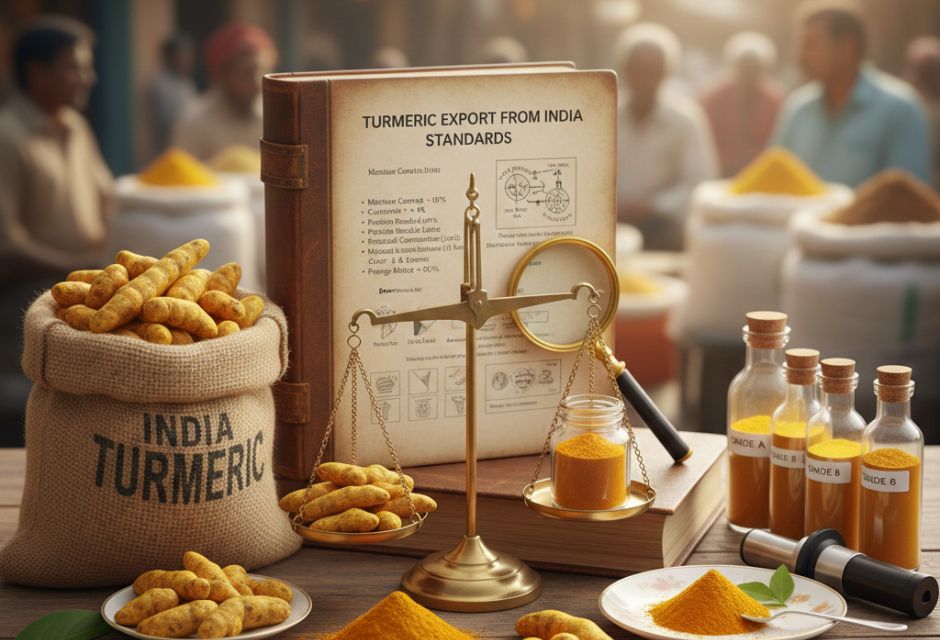
To successfully operate in the global market, exporters must follow these internationally accepted quality norms:
1. Curcumin Content
Curcumin determines the quality and price of turmeric.
- USA & Canada: 3%–5%
- Europe: 2.5%–7%
- Middle East: 2%–4%
Higher curcumin = higher export value.
2. Moisture Content
Moisture level must be below 12% to prevent fungus, mold growth, and spoilage during shipping.
3. Aflatoxin Levels
Aflatoxins are harmful toxins caused by poor drying or storage.
- Accepted limit: 5–10 ppb
- EU has the strictest rules
Testing is mandatory before export.
4. Foreign Matter & Purity Standards
Export-grade turmeric must be:
- Free from dust, stones, fibers
- Free from artificial color
- Free from pests and insects
- Free from pesticide residues
5. Microbial Limits
Turmeric must pass tests for:
- Salmonella
- E.coli
- Yeast & mold
- Total plate count
This ensures safety for human consumption.
Certifications Required for Turmeric Export From India
1. APEDA Registration
Mandatory for agricultural exporters.
2. FSSAI Food License
Required for all food product businesses in India.
3. Spices Board Certificate
Needed for quality approval and consignment clearance.
4. Phytosanitary Certificate
Confirms the shipment is pest-free.
5. Lab Testing Report
Includes:
- Curcumin percentage
- Moisture content
- Aflatoxin report
- Heavy metal test
- Microbial analysis
6. Country-Specific Certificates
- FDA (USA)
- EU Regulations (EC 1881/2006)
- Gulf Standards (GSO)
Packaging & Labeling Requirements for Turmeric Export
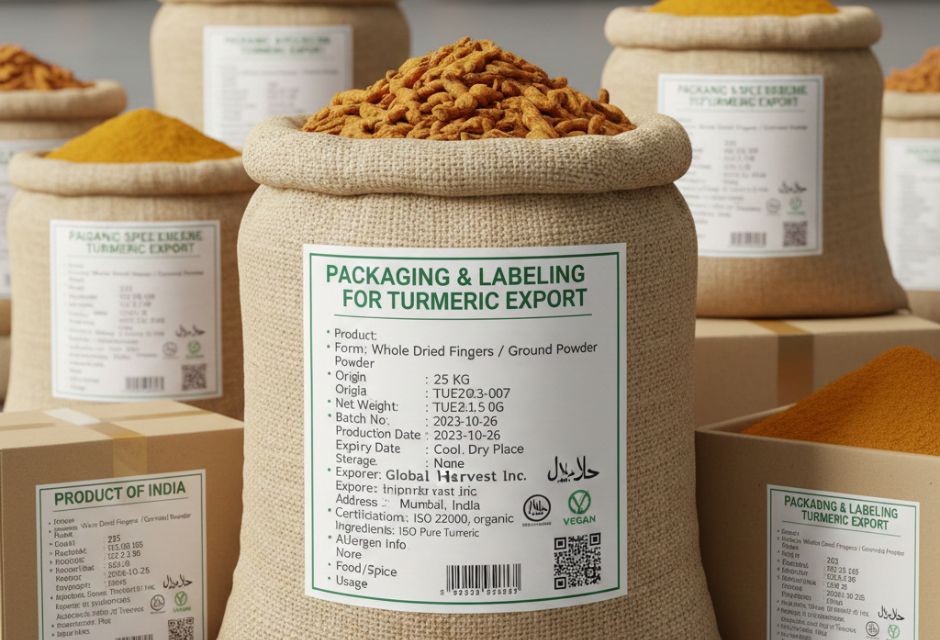
Packaging plays an essential role in maintaining turmeric quality.
Approved Packaging Materials
- Food-grade HDPE bags
- Jute bags with inner lining
- Vacuum-sealed packs
Export Label Must Include
- Product Name
- Batch No.
- Net Quantity
- Grade
- Country of Origin (India)
- Exporter Details
- Storage Instructions
You Can Read Also: Why Indian Turmeric Dominates the Global Spice Market
Documentation Required for Turmeric Export From India
Exporters must ensure all paperwork is accurate to avoid delays:
- Commercial Invoice
- Packing List
- IEC Code
- Certificate of Origin
- Phytosanitary Certificate
- Spices Board Certificate
- Lab Test Report
- Bill of Lading / Airway Bi
Conclusion
Exporting turmeric is a profitable business, but only if you follow all required quality standards and certifications. Maintaining purity, ensuring proper drying, testing for aflatoxins, and using proper packaging are essential steps for successful Turmeric Export From India.
By meeting global standards, exporters can build long-term relationships with buyers, avoid shipment rejection, and grow their presence in international markets.
FAQs about Turmeric Export From India
What is the minimum curcumin percentage for export?
Most buyers require turmeric with 3%–5% curcumin.
Is APEDA registration necessary?
Yes, APEDA registration is compulsory for agricultural exporters.
What countries import the most Indian turmeric?
USA, UK, Malaysia, UAE, Japan, and Bangladesh are top importers.
What testing is mandatory before export?
Curcumin %, aflatoxin levels, moisture content, heavy metals, and microbial tests.
What is the acceptable moisture level for export turmeric?
Moisture must be below 12%